
Water Damage and Mold in a Vacant Property: The First 48 Hours
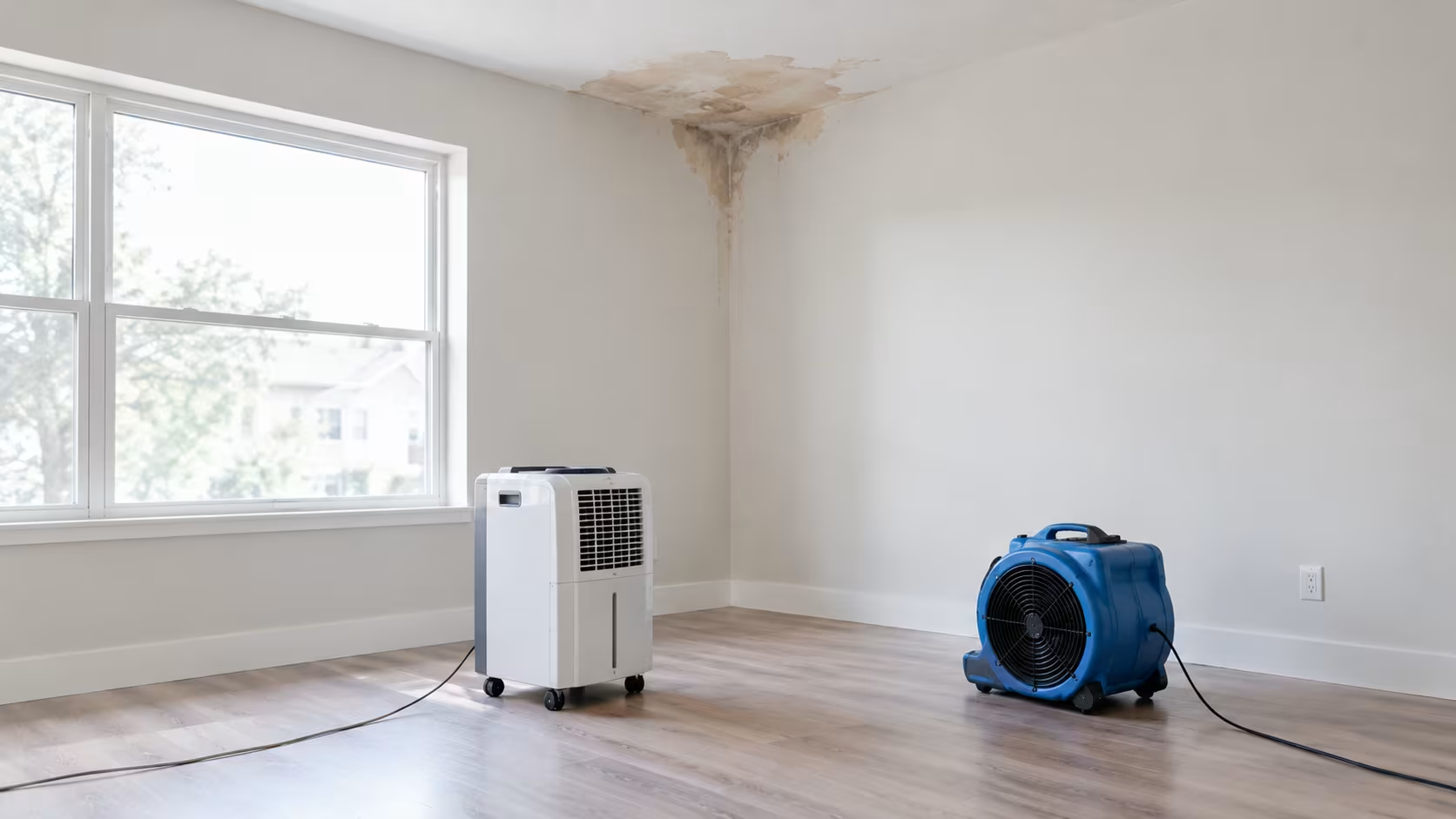
Water is the most expensive thing that can go wrong in an empty building, because nobody is there to notice. Moisture control is the key to preventing mold, and the clock starts when the water does. Here is what to do in the first two days.
Why speed matters
The US Environmental Protection Agency's guidance on mold is blunt: mold needs moisture, and the way to control mold is to control moisture. Its guidance on flood cleanup advises drying wet materials quickly, generally within 24 to 48 hours, because mold can begin to grow on wet materials in that window. In a vacant property that discovery often comes days or weeks late, which is why inspection frequency matters so much.
Step 1: Stop the water
- Shut off the water at the main valve, or at the fixture's shut-off.
- If the cause is the roof, a window or storm intrusion, use a tarp or temporary board to stop more water getting in.
- If electrical outlets, panels or appliances are wet, stay out and have the power shut off by a qualified person. Don't stand in water near electrical equipment.
Step 2: Document
Photograph and video everything before you move or remove anything: the source, the affected rooms, ceilings, floors, walls and contents. Note the date and time. Contact your insurer promptly and ask what they require (see vacant home insurance in California).
Step 3: Remove standing water and start drying
- Remove standing water with pumps or wet vacuums.
- Run fans and dehumidifiers, and ventilate when it is safe and secure.
- Remove soaked porous materials that can't be dried quickly, such as wet carpet padding, insulation and soaked drywall. Professionals can tell you what can be saved.
- Move furniture and contents out of wet areas.
Step 4: Check for mold
Look for visible growth, discoloration and a musty smell, particularly behind baseboards, under sinks, in closets and around the water heater. The EPA notes that small areas of mold can often be cleaned by the owner following safety guidance, while larger areas, mold that returns, or contamination from sewage or floodwater typically call for professionals. Wear protective gear, and don't mix cleaning chemicals.
Step 5: Fix the cause
Drying and cleaning only works if the source is repaired. Common culprits in empty homes include failed supply lines, water heater leaks, dripping condensate lines, roof flashing, clogged gutters and grading that sends water toward the foundation.
Prevent the next one
- Inspect on a regular schedule, and after storms.
- Know where your shut-off valves are.
- Replace aging hoses and supply lines.
- Keep gutters, drains and roof edges clear.
- Keep indoor humidity down with ventilation or a dehumidifier.
Large water losses, sewage backups and anything involving electrical hazards or suspected hazardous materials are jobs for licensed professionals.
Quick answers
Can I clean mold myself?
The EPA says small areas can often be handled by owners with proper precautions, while large areas, recurring mold or contaminated water call for professional help.
How fast does mold grow?
It can begin within about a day or two on wet materials, which is why quick drying is the priority.
Sources
Related reading

Winterizing a Vacant Home in California: Freeze, Rain and Storm Prep
How to prepare an empty California property for cold snaps and the rainy season: plumbing, roof, gutters, drainage and regular checks.

Defensible Space and Zone 0: Wildfire Prep for Vacant California Properties
How defensible space and the ember-resistant 'Zone 0' concept apply to vacant California homes, plus a seasonal vegetation checklist.

What Is Property Preservation? A Guide for California Property Owners
Property preservation explained: what it includes, who uses it, how it differs from routine maintenance, and what California owners, landlords and investors should know.