
Can a California Landlord Enter a Rental? Notice Rules for Inspections and Repairs
Repairs, inspections and showings all require someone to enter a rental. California limits when and how a landlord may enter an occupied unit. If you manage rentals, scheduling work around these rules protects you and the relationship with your tenant.
The general rule
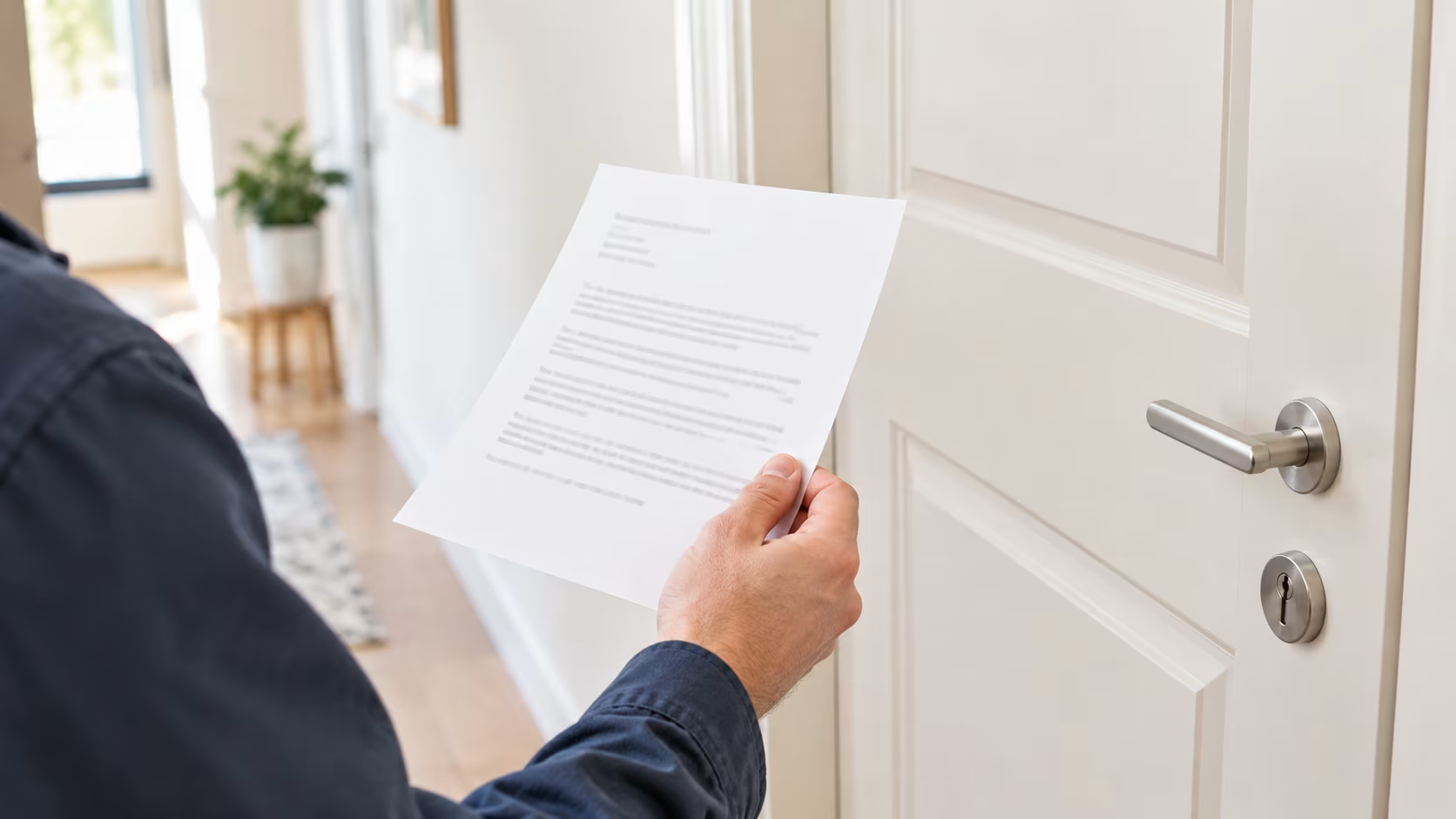
California's landlord entry statute, Civil Code section 1954, says a landlord may enter a rental unit only for specific purposes, during normal business hours, and after giving reasonable written notice. Twenty-four hours is presumed reasonable in most cases.
Permitted reasons
- Necessary or agreed repairs, decorations, alterations or improvements.
- Supplying agreed services.
- Showing the unit to prospective or actual buyers, tenants, workers or contractors.
- Inspections related to the tenant's move-out (the initial inspection).
- Responding to a court order.
- Entry after the tenant has abandoned or surrendered the unit.
Emergencies
In an emergency, such as a fire or serious water leak, a landlord may enter without advance notice. A routine inspection isn't an emergency.
Notice details
- The notice should state the date, approximate time and purpose of entry.
- Certain notices are served differently depending on method (personal delivery, mail, posting), and the amount of time can change with the method, and for showings.
- Tenants can agree to different arrangements, but a landlord shouldn't rely on a vague verbal agreement.
What not to do
- Don't use entry to harass a tenant or to pressure them to move.
- Don't send workers in without notice for non-emergency work.
- Don't enter outside normal business hours without the tenant's consent.
Scheduling repairs smoothly
- Decide the scope and the trades involved before you notify, so one notice covers the work.
- Offer a time window and allow the tenant to propose alternatives.
- Confirm in writing and keep a copy.
- Tell the tenant who is coming and what they'll be doing.
- Take before-and-after photos where appropriate.
If you can't be there, a coordinator can handle scheduling, access and reports while you keep a written record.
Local ordinances, including just-cause and rent-control rules, can add entry rules. Check your city and consult an attorney for specific situations.
Quick answers
Can I enter without notice to fix a leak?
In an actual emergency, yes. A non-urgent repair requires notice.
Do cities add their own rules?
Some do. Local rent ordinances may add requirements, so check yours.
Sources
Related reading
California Tenant Move-Out and Turnover Checklist for Landlords
A landlord's checklist for tenant move-outs in California: inspection, photos, cleaning, repairs, and the security deposit timeline and rules.

Trash-Out and Cleanout: Handling Left-Behind Belongings in California
What to do with belongings left behind by a tenant or previous occupant in California, and why you shouldn't just throw them out.

What Is Property Preservation? A Guide for California Property Owners
Property preservation explained: what it includes, who uses it, how it differs from routine maintenance, and what California owners, landlords and investors should know.